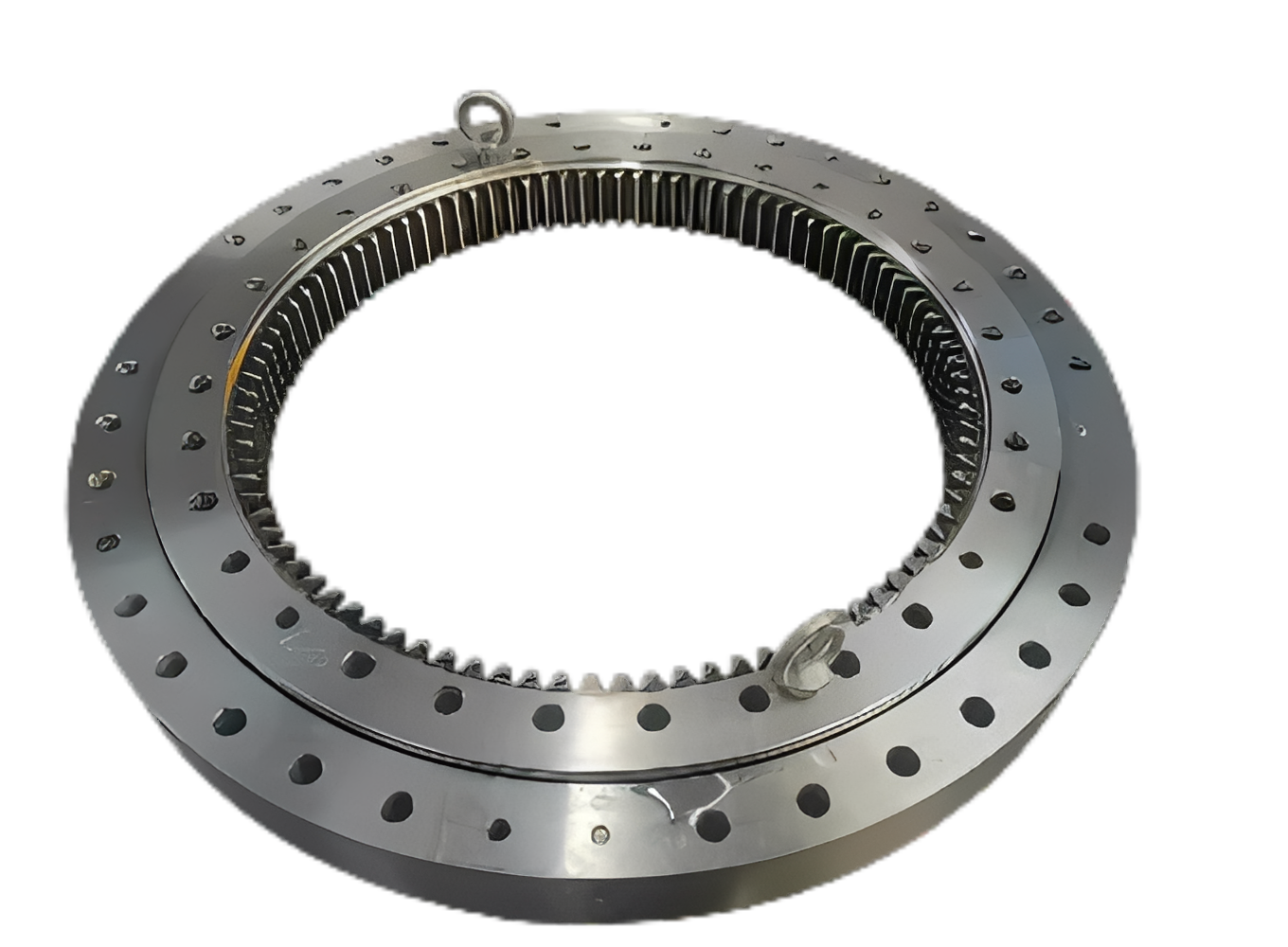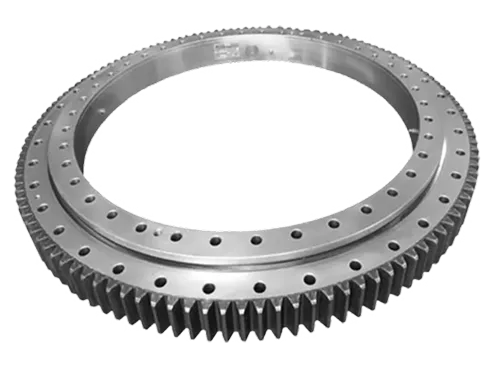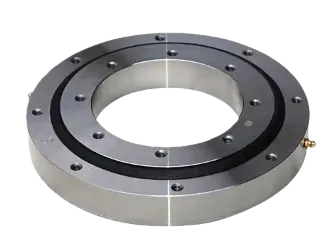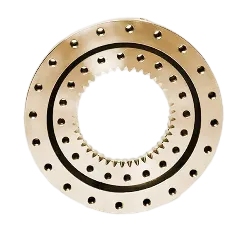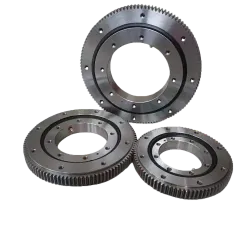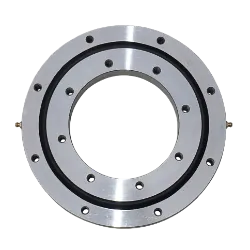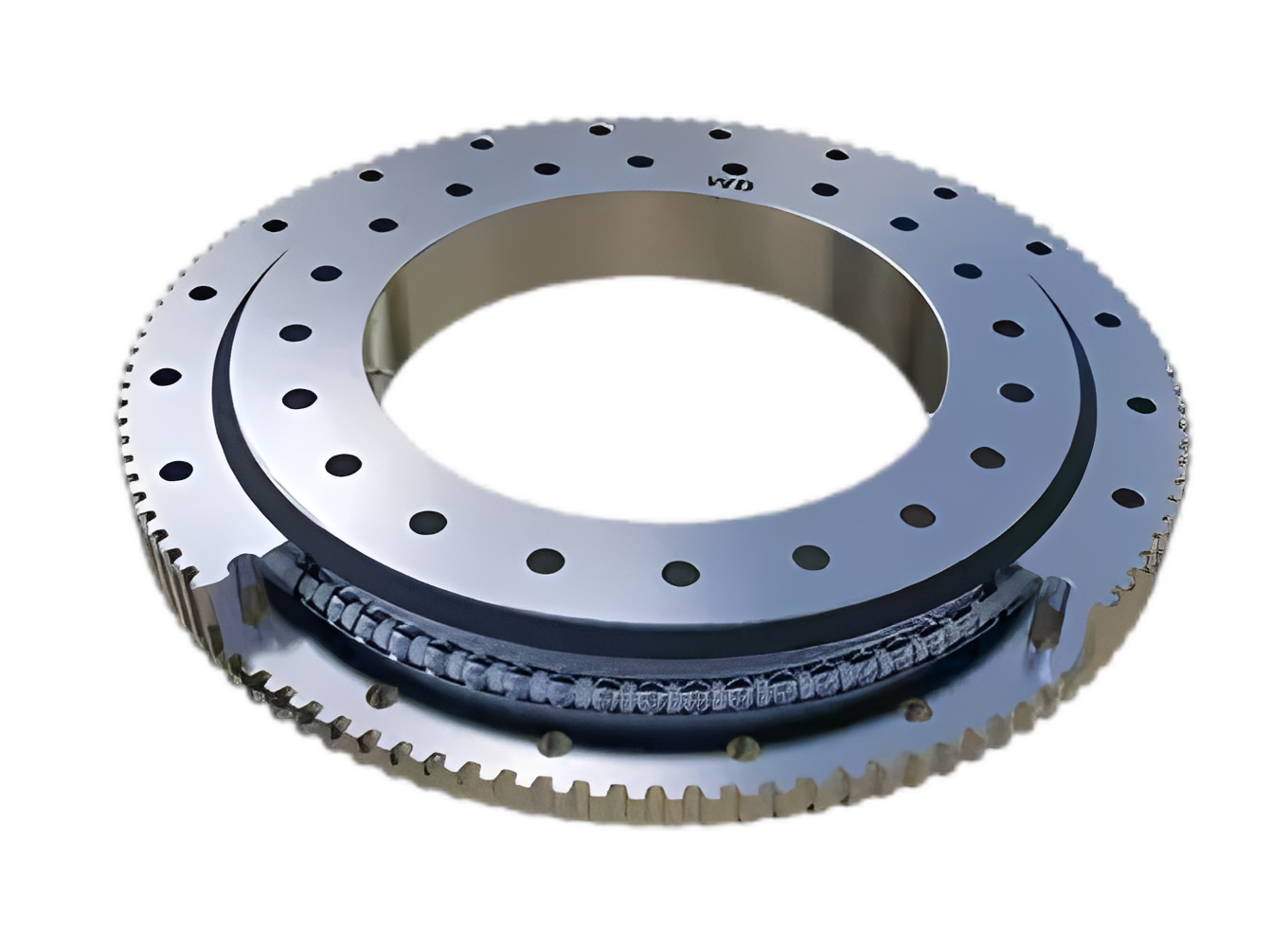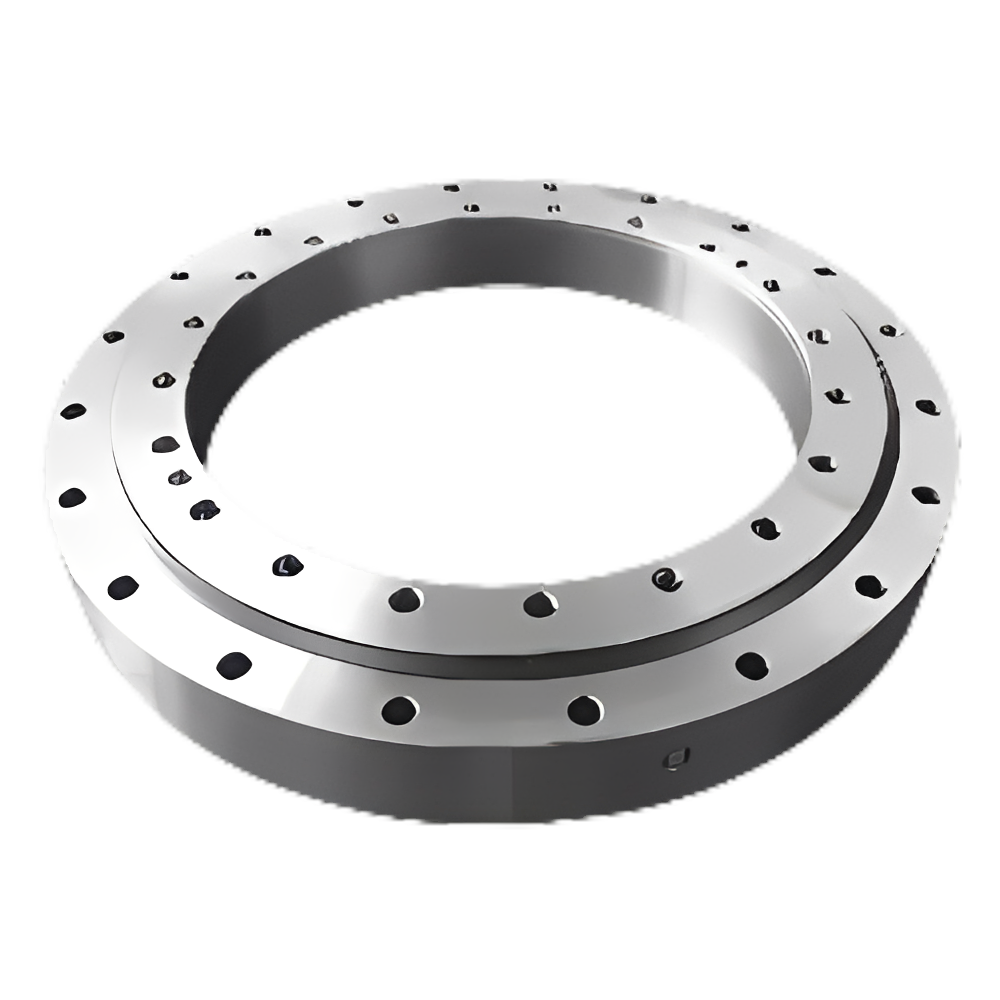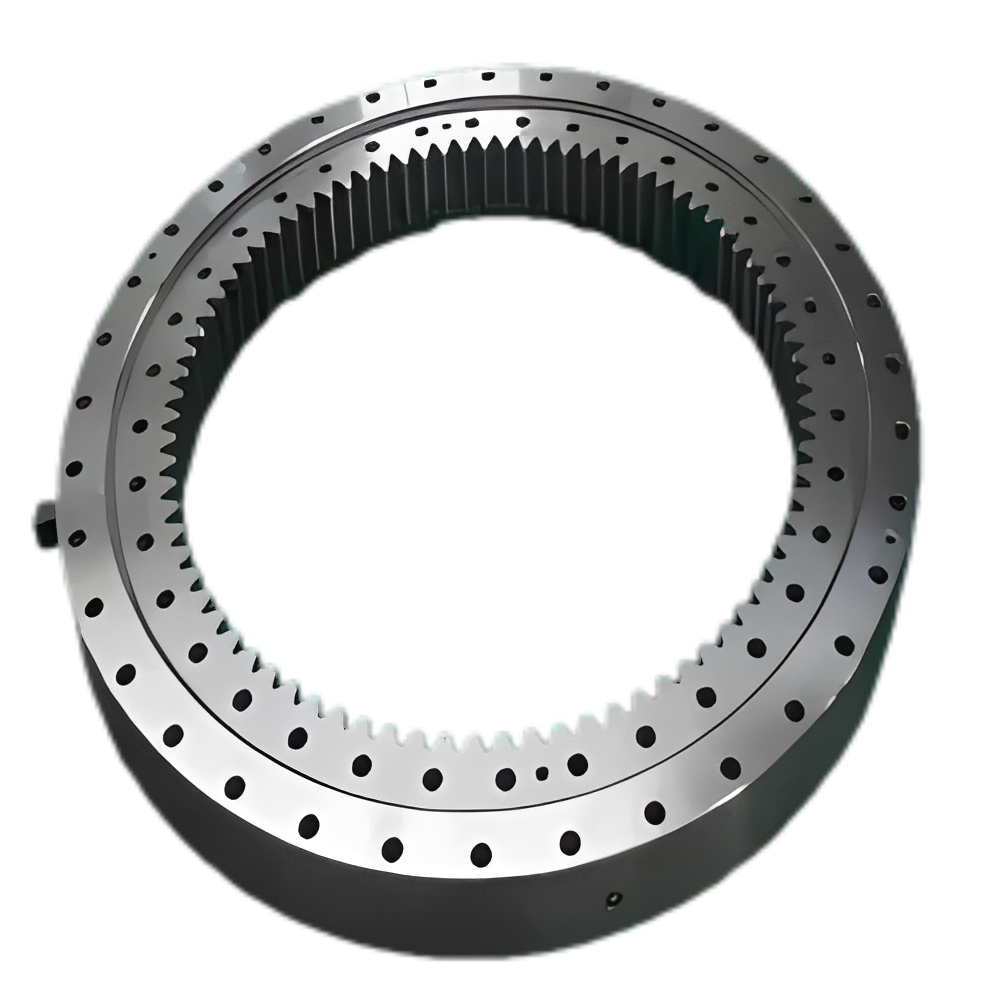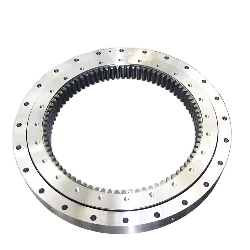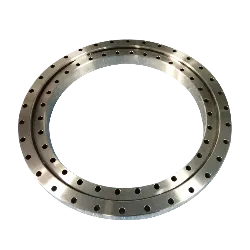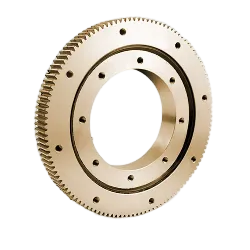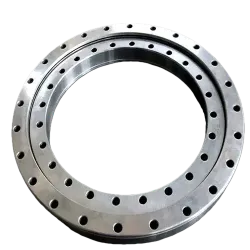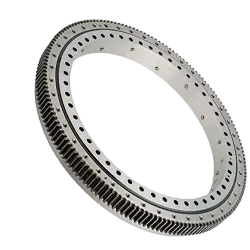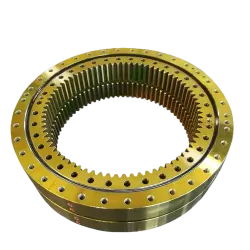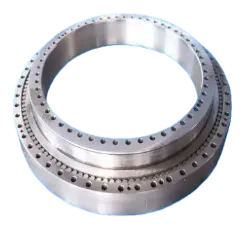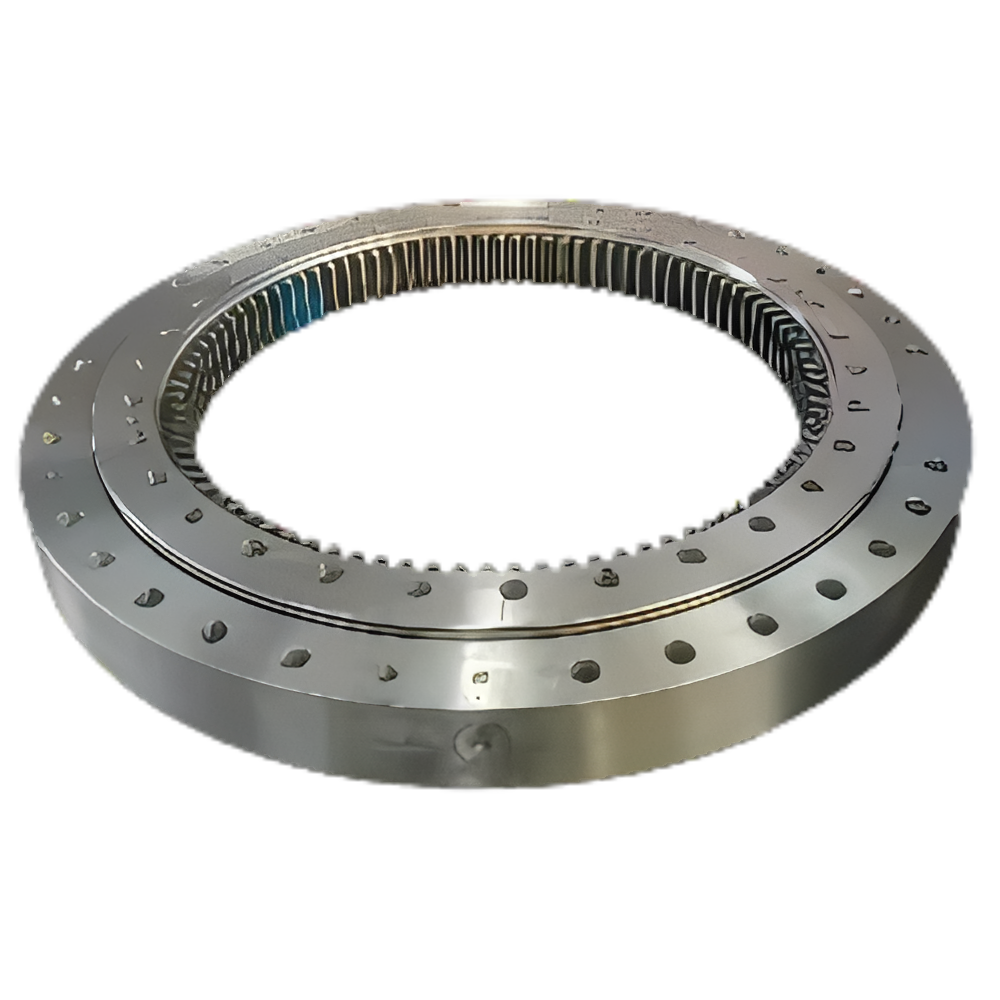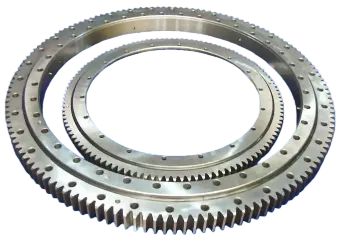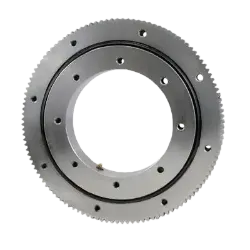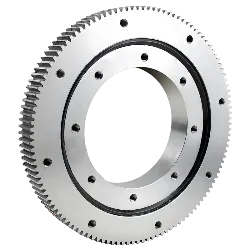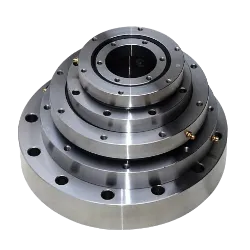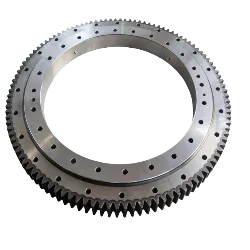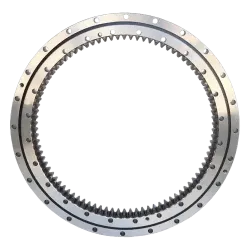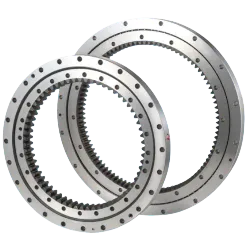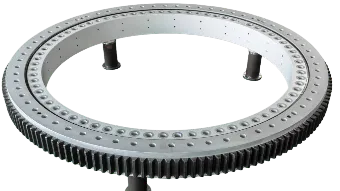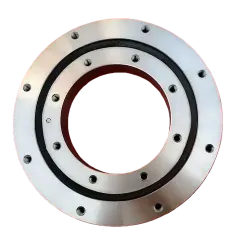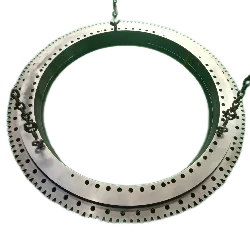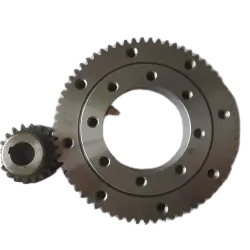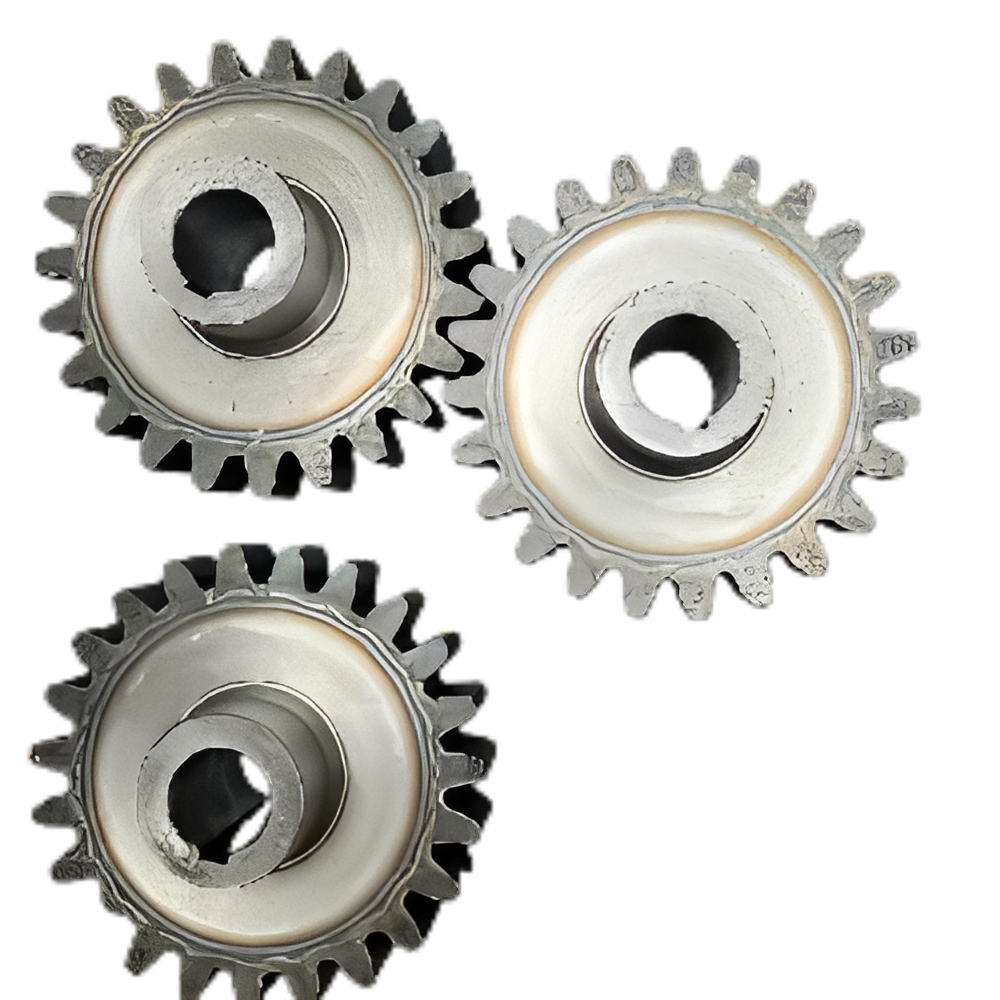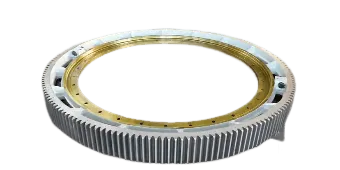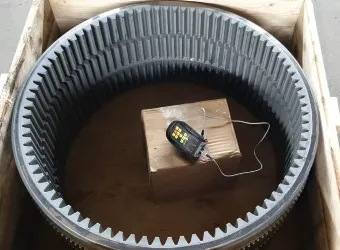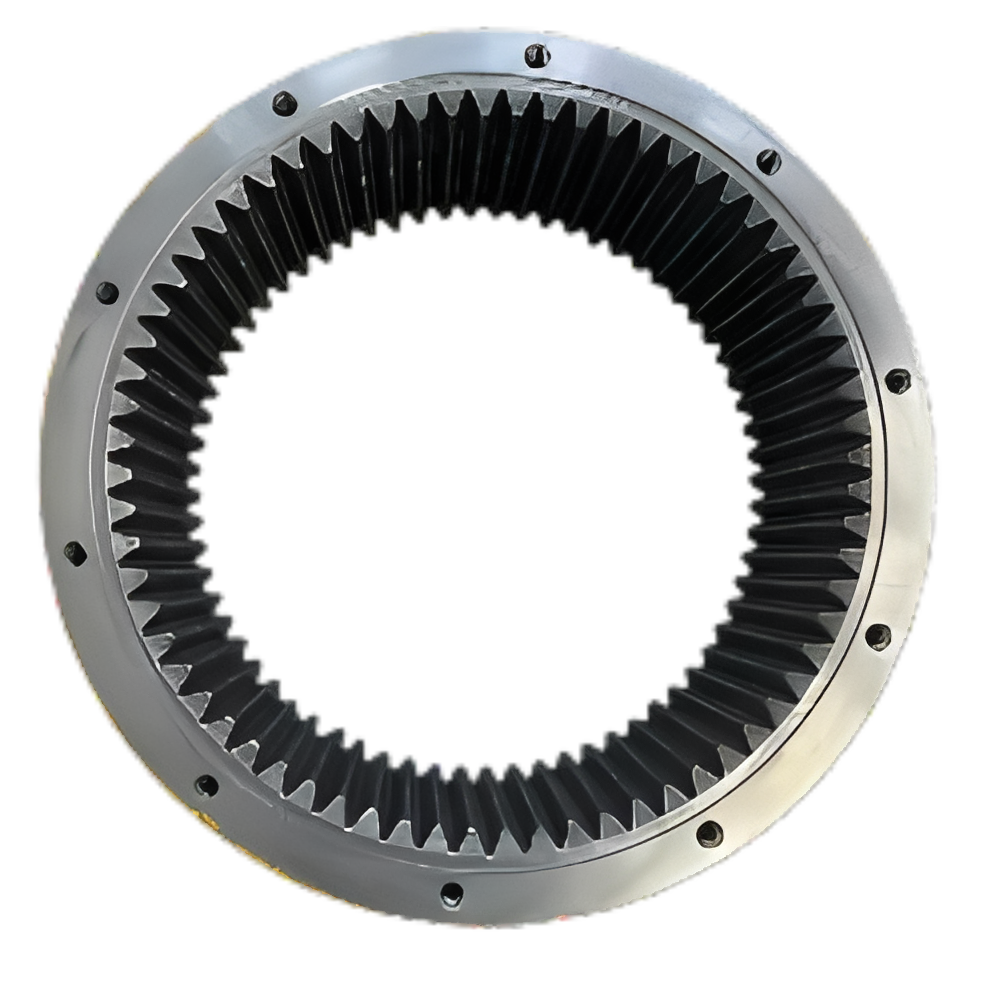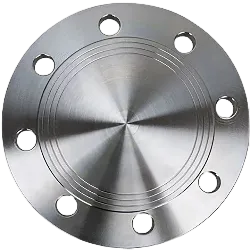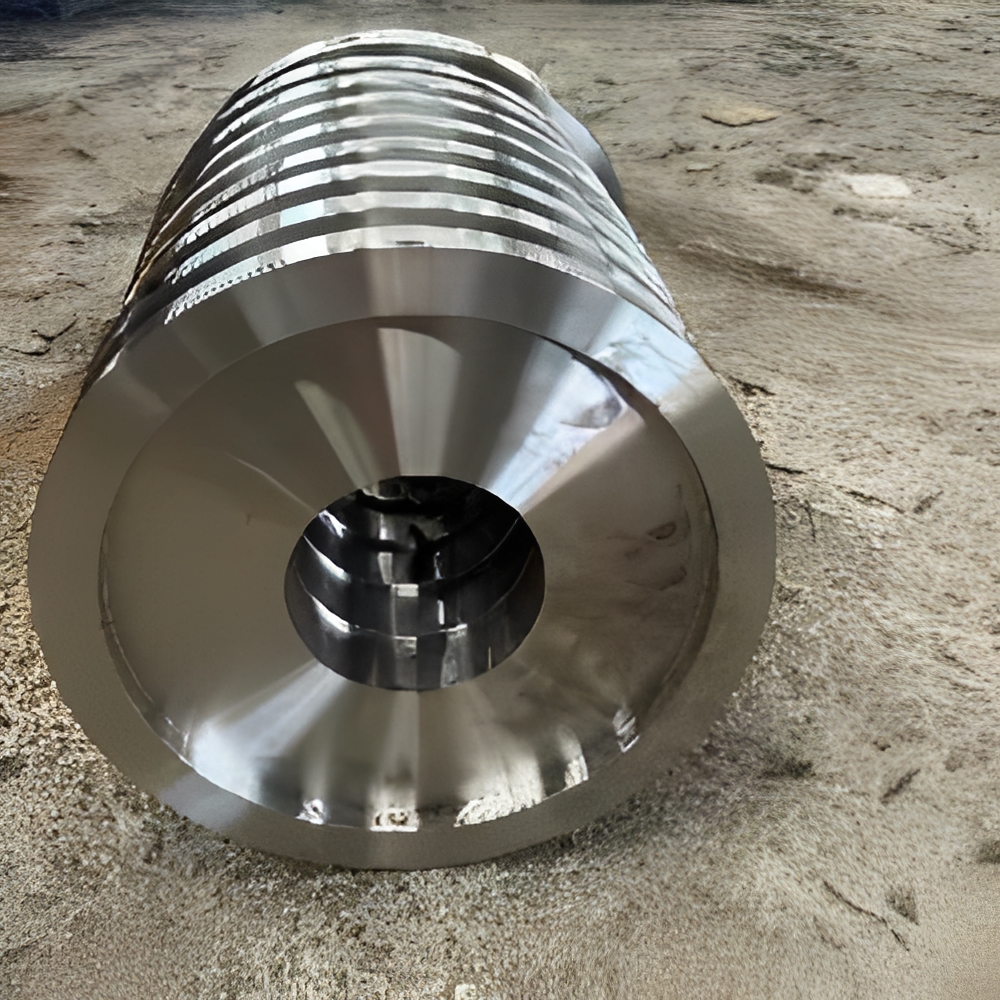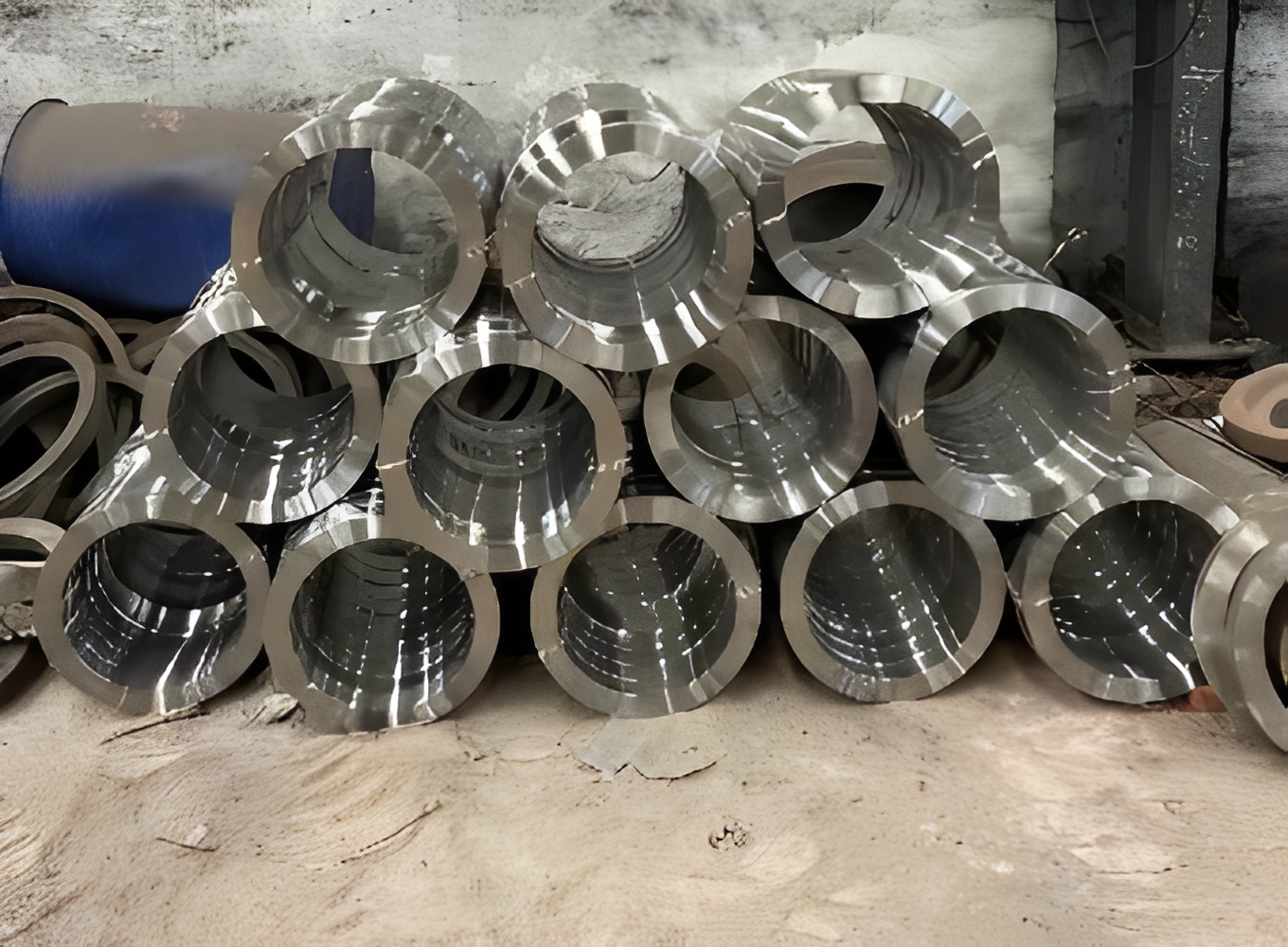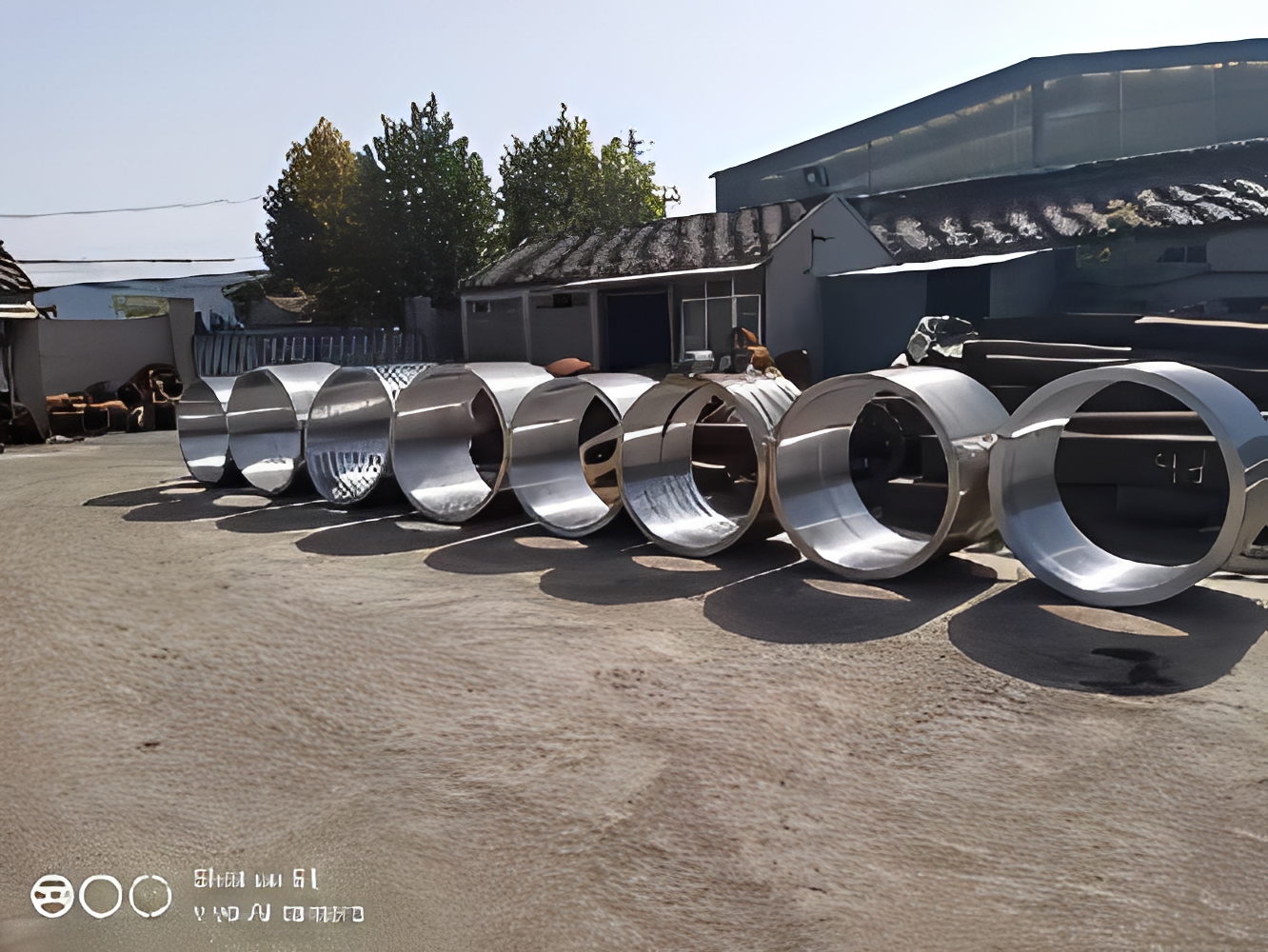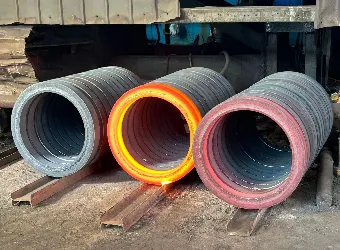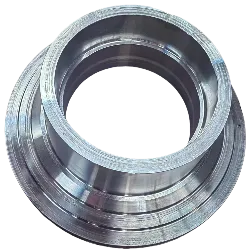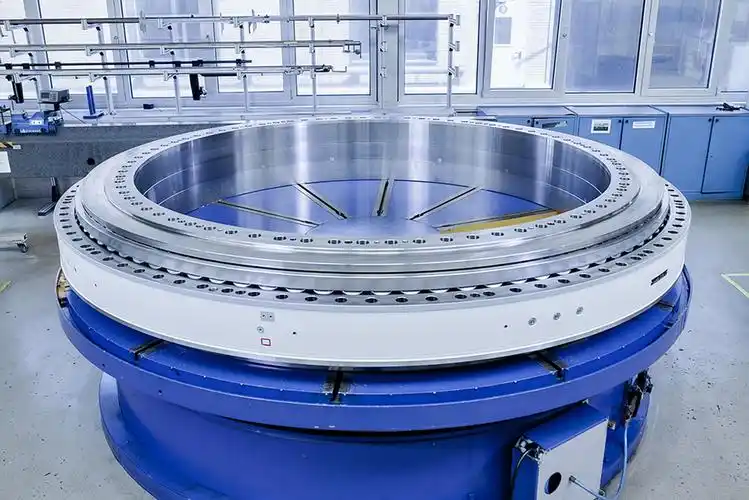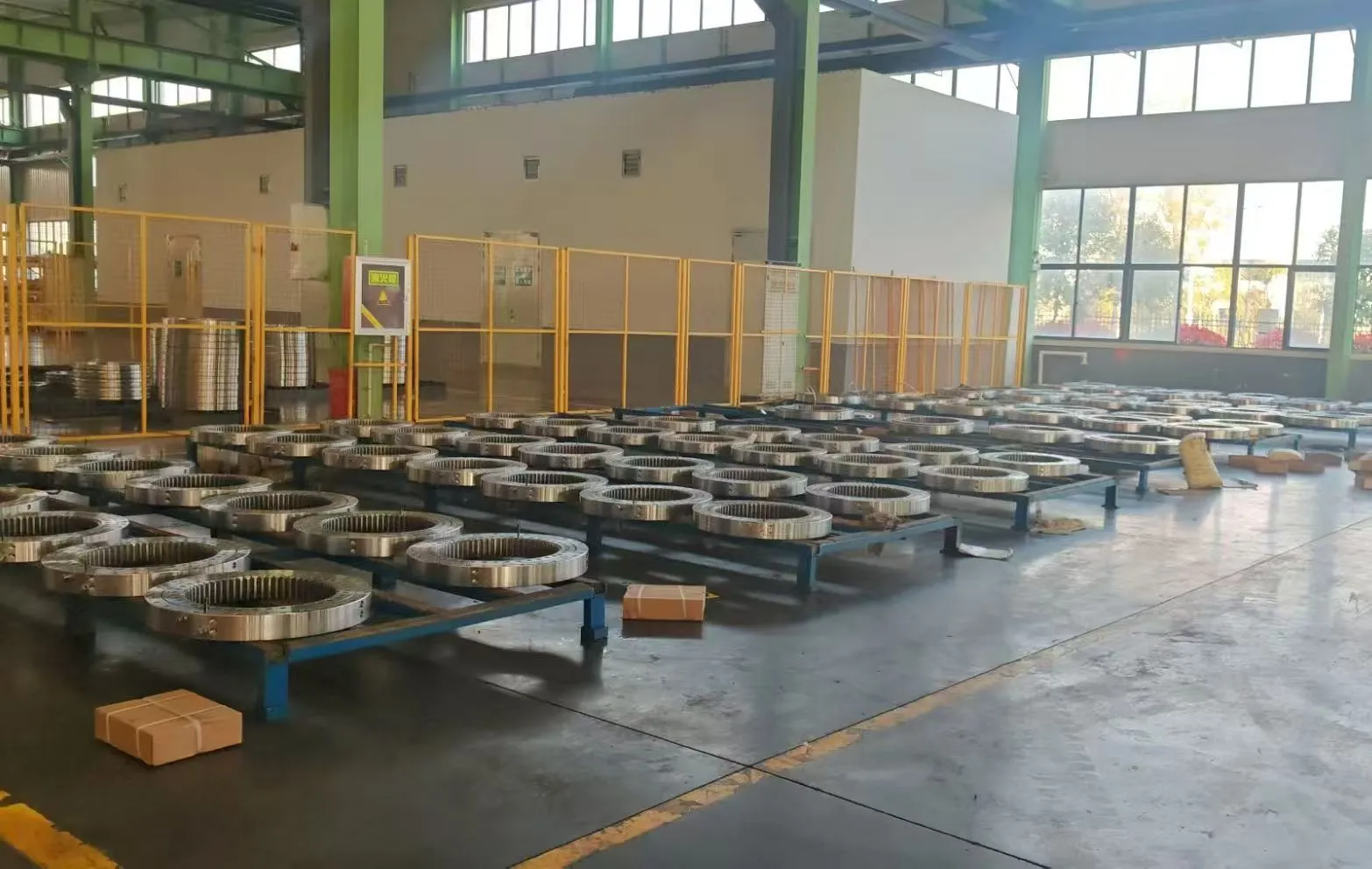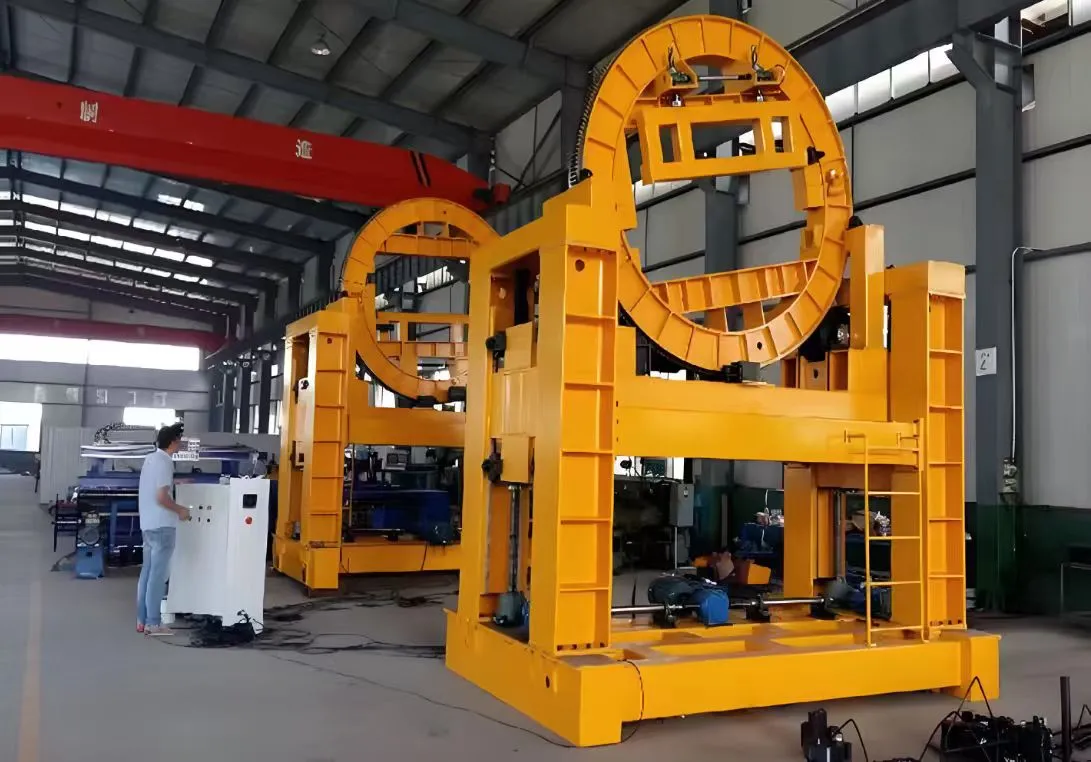
Slewing bearing (also known as slewing bearing, slewing bearing) is a large bearing component that can withstand axial force, radial force and overturning moment at the same time. It is widely used in mechanical equipment that requires rotational motion. It usually consists of an inner ring, an outer ring, rolling elements (steel balls or rollers), cages and sealing devices. It has a compact structure and strong load-bearing capacity. It is an indispensable key component in modern engineering equipment.
🌟 Product Features Strong load-bearing capacity: can withstand multi-directional compound loads at the same time Compact structure: saves installation space and facilitates machine design High rotation accuracy and smooth operation Easy installation and maintenance: can be installed as a whole and simple lubrication Customizable design: supports different size, structure and working condition requirements According to different structural forms, slewing bearings can be divided into single row ball type, double row ball type, three row roller type, crossed roller type, light slewing bearing, etc., suitable for different loads and accuracy requirements.
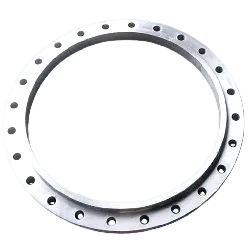
🏗️Application fields Slewing bearings are widely used in many industries due to their excellent performance: Construction machinery Excavators Cranes Rotary drilling rigs Concrete pump trucks Wind power equipment Pitch systems Port and ship machinery Port lifting equipment Marine cranes Deck machinery Industrial automation and intelligent equipment Industrial turntables Automated production lines Robot rotating joints Special equipment and other fields Radar antennas Medical equipment Amusement facilities
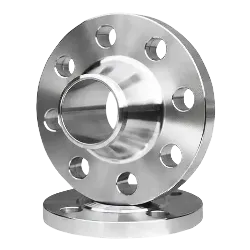
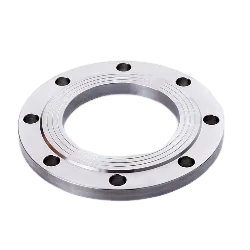
✅ Summary As a key slewing connection component, the performance of the slewing bearing directly affects the stability, safety and service life of the entire equipment. As engineering equipment develops in the direction of large-scale and intelligence, higher requirements have been placed on the reliability, precision and customization capabilities of slewing bearings.